An Airline Fare Climbs Every Time the Same Visitor Looks Again
Most people who book flights have a theory about this. You check a fare, check it again an hour later, and it’s gone up. A warning appears saying four other people are looking. Is the seat really selling out, or has the site learned that you want it?
This case study runs on a made-up airline page built to do the suspicious thing on purpose. Each time the same visitor comes back, the fare goes up a step. Nothing else changes.
Open the fare page in Unweb and reload it twice. Then click Side by side, reload once more, and click Side by side again. You end up with three strangers who have looked at the flight four times, twice and once.
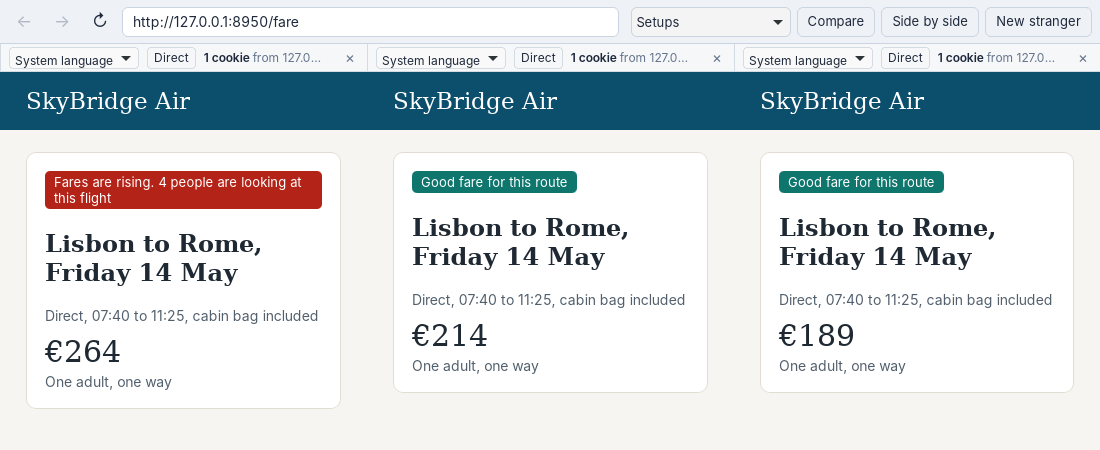
Same flight, same minute, three prices. The only difference is how often each stranger has looked.
What It Shows
€264, €214 and €189 for the same seat. Each strip shows one cookie from the site, and it holds a single number: how many times this visitor has looked. The red warning about other people looking appears only for the stranger that has looked most. The other two are never told the flight is in demand.
A cookie can’t tell a keen traveller from a curious one. It just counts. That’s enough to put a different price in front of each of them.
Trying It on a Real Site
Look up the flight you’ve been watching in your normal browser. Then open the same search in a stranger beside it. If the stranger sees less, the difference came from what your browser carries, and you can book from the stranger.
If both show the same fare, the site probably isn’t doing this, or it’s pricing by something every stranger on your computer shares, such as your IP address. A location through a proxy answers that one.
The fare page is in examples/case-studies with the other made-up sites. Run python3 server.py and open http://127.0.0.1:8950/fare.